Wellness Goals: A Weekly Check-In You Can Keep
Wellness goals can fit a full week when each begins with one small action. Plan a time to try it, then use a gentle check-in to keep or adjust the goal.
By Her's Notion Planner by Cosmo Suite · Editorial policy
Published · 7 min read
General information, not medical advice.
Wellness goals can be small plans for the parts of life you want to tend to. You might want more time outdoors, a regular catch-up with a friend, room for a hobby, or a gentle movement routine. A goal becomes easier to revisit when you describe an action you can choose and give it a place in your week.
Start with one action. Decide when you might do it, then check in at week's end. Keep the plan flexible. A full week can change, and the goal can change with it. This guide offers a simple way to choose and review goals. It does not give medical advice or promise health outcomes.
If you want a calm Notion space for personal plans, Her's Notion Planner includes a Wellness hub and dashboards for desktop, tablet, and phone. You can also use the ideas here in a notebook or a blank page.
A wellness goal should fit the week you have
A wellness goal should describe something you can do during the week. “Be healthier” can mean many things. Try naming one action, such as “Take a walk after lunch if the weather and my day allow.” Keep the sentence flexible enough for your actual schedule.
A wellness goal is a personal action you choose to make room for during a week and revisit afterward. It might involve time outdoors, connection, creativity, or a routine that matters to you.
The CDC's guide to building a healthy habit recommends defining an action and making a plan, while its guide to fitting a new habit into your life encourages starting small and choosing a pace you can maintain. Those pages discuss health habits; here, the practical point is to shape a plan around your own time and circumstances.
Wellness can mean different things to different people. A UCSF Wellness Practice Journal groups weekly activities into physical, social, mental, and spiritual areas. Think of those as prompts, not a checklist you must complete. Your own areas might be rest, creativity, connection, or time outside.
Wellness goals at a glance
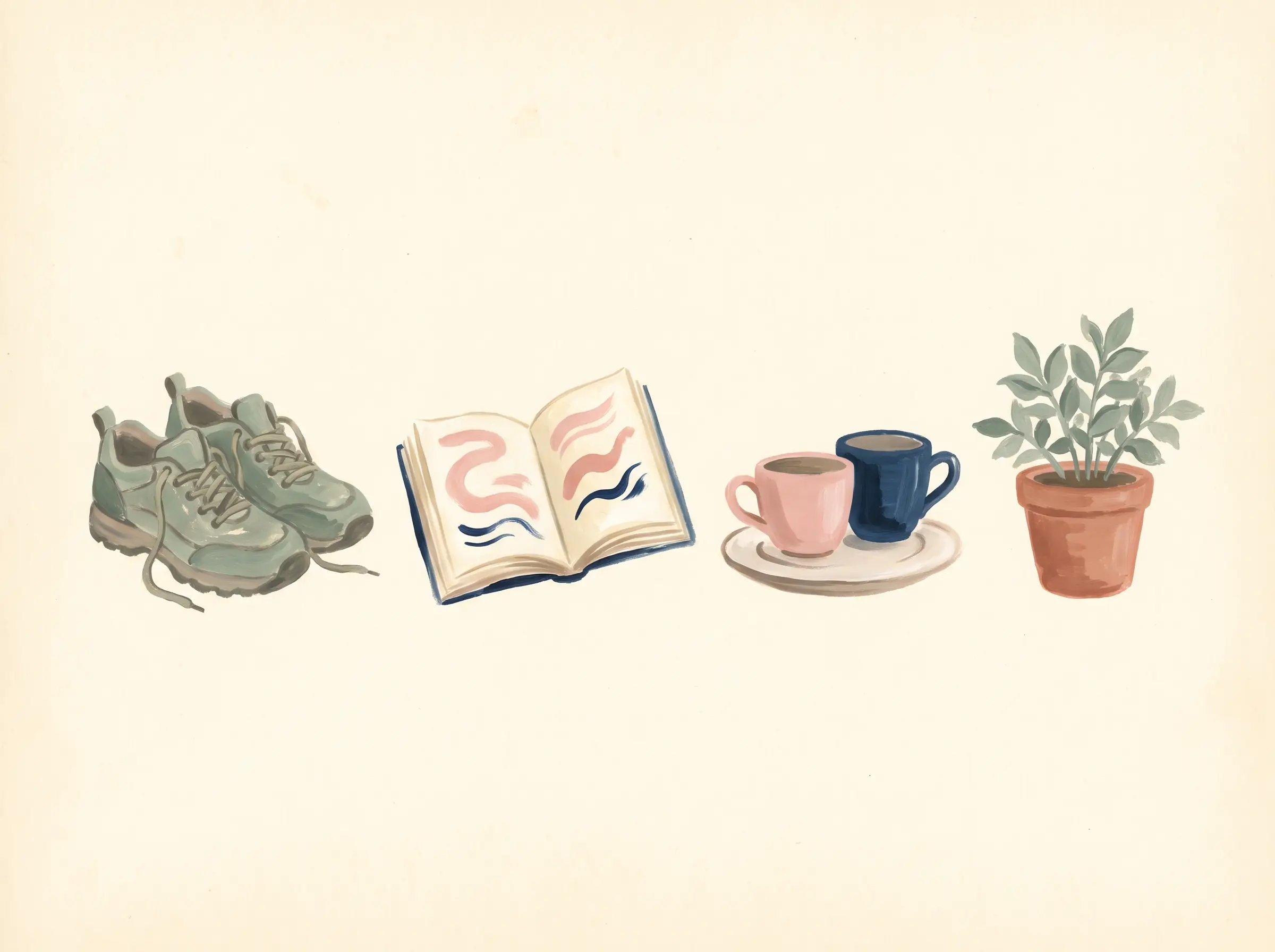
Choose one area that feels worth your attention, then pick a small action that belongs to you. This table offers starting points, not health prescriptions.
| Area to explore | A possible weekly action | A gentle check-in |
|---|---|---|
| Movement | Choose an activity that suits your ability and schedule | Did the time and place work for me? |
| Connection | Set aside time to call or meet someone | Would I like to make room for this again? |
| Learning or creativity | Practice a hobby or work on a personal project | Did I enjoy the way I spent that time? |
| Rest and routine | Protect a quiet moment in a part of the day | What made it easier or harder to pause? |
| Personal space | Tidy or prepare one small area you use | Did this change make the space more useful? |
You do not need a goal in every row. Pick the one that feels relevant now. If a goal involves exercise, sleep, food, or a health condition, use advice from a qualified professional for personal recommendations. General examples cannot account for your history, access needs, or changing circumstances. Treat them as prompts to adapt, skip, or replace as needed.
One activity can speak to more than one area. The UCSF wellness journal uses a walk with a friend as an example of both physical and social activity. If that combination suits you, write one entry and note why you chose it. You do not need a separate task for every area. Keep the plan compact enough to scan. If the activity depends on another person, think of a second option for a day plans change. For instance, you could read at home if a friend cannot meet. That is a simple planning fallback, not a wellness prescription.
Turn a broad wish into one weekly action
Write your goal so you can tell what you chose to do. Include the action and a possible time or cue. You may add a small version for busy days and a note about what could get in the way.
For example, “make time for creativity” can become “work on my sketchbook after breakfast on a day I have a free morning.” This is an illustrative example, not a tested routine. If a plan feels too demanding, make the action smaller or remove the schedule until it fits.
A broad aim such as “feel more connected” takes shape when you choose one action, like messaging a friend or setting aside time for a call. You choose the action; the other person's response is outside your control. If a plan depends on another person's availability, decide what you would like to do if that time changes.
Use these prompts:
- What matters to me this week? Choose a value or part of life, such as connection, rest, movement, or learning.
- What action can I choose? Prefer something within your control, such as preparing a book to read or sending a message.
- Where could it fit? Tie it to a time, place, or ordinary part of your day if that helps you remember.
- What is my smaller option? Keep a lighter version for a week when the original plan no longer fits.
Use wording you will recognize on a crowded day.
Make the next step clear enough to try. If dates or check marks add pressure, keep the goal open-ended.
Make a weekly check-in short and useful
A check-in can be a few notes about your plan and what you want to change. You might do it on a day that already works for you, or skip it when you need the time for something else.
Try four questions: What did I plan? What did I try? What helped or got in the way? What would I like to adjust? Write a short answer to each, or choose just one question. Use the check-in to notice your experience and choose any adjustment.
Here is a fictional example. Mara planned to work on a sketchbook during a quiet morning. A family errand filled that time, so she moved the activity to a later day. At the end of the week, she kept the goal and chose a flexible time window for the next week. The example shows a planning adjustment; it does not predict a result.
If you want a page to hold that note, the aesthetic Notion setup guide shows ways to make a space easier to return to. You can also compare paper and Notion for a self-care planner before choosing where to keep your routine.
Keep the record light. You might write the action and whether you tried it, then add a sentence about what shaped the week. A check mark records the activity. Add a short note if you want to remember whether it felt worthwhile or suited you.
Check who can access your account and device before you record health details. Keep only the notes that help with your next planning choice. You can write private reflections somewhere you control or leave them unwritten.
Adjust the plan when life changes
When a goal stops fitting, look at the plan before deciding that you failed. The time may have been unrealistic, the activity may not have felt worthwhile, or the week may have brought an unexpected commitment. Each answer points to a different adjustment.
- If the action felt too big, choose a smaller version.
- If the time did not work, pick another window or remove the schedule.
- If something interrupted the plan, write a backup option you would be comfortable trying.
- If the goal no longer matters, let it go and choose another focus later.
The CDC's healthy-habits guidance also suggests beginning with small changes and adjusting as you build a routine. A goal can be useful even if it changes. You are learning what makes a plan workable for you.
For another example of making room for a personal routine, see a simple night routine. If your focus is one repeated action, the Notion habit tracker guide explains a simple way to record habits without making every day a score.
Use a missed activity as a cue to review the timing, size, or place of the goal. You can revise the plan without judging yourself. The CDC's guide to new healthy habits suggests choosing a pace that feels sustainable and building from actions you can manage. Personal circumstances differ, so use a clinician's guidance for medical decisions.
Use Her's Notion Planner to keep goals visible
Her's Notion Planner is a Notion template with five hubs, including Wellness, and dashboards for desktop, tablet, and phone. Its Life Areas and Goals include real-time progress, so you can organize the personal plans you choose to keep. The template does not provide health advice or decide which goals are right for you.
If an already arranged space would help, Her's Notion Planner gives you a finished Notion setup with a Wellness hub. You can use the setup guide and step-by-step tutorial to get started. A notebook or free Notion page may suit you better if you only need one short list.
Before adding another tracker, ask whether you will return to it during a normal week. A single goal, a place to note the plan, and a brief review may be enough. If more pages make the routine harder to open, remove them.
Why trust this article
This guide comes from the team behind Her's Notion Planner, a Notion planning template. We have a product interest, so the planner appears as one option alongside paper and free Notion pages. The planning prompts draw on CDC guidance and a UCSF wellness journal. The examples are editorial illustrations, not reports of tested outcomes. This article does not diagnose or treat a health condition. Read our editorial policy and contact us to report a correction or ask a question.
Frequently asked questions
What are examples of wellness goals?
Choose an action for yourself. That might be making time for a walk, a hobby, or a call with a friend. Review it when useful.
How do I set a wellness goal for the week?
Choose an area that matters this week, name one action, and think about when it could fit. At week's end, keep it, adjust it, or choose something else.
How many wellness goals should I track at once?
There is no set number. One goal can be enough when a longer list feels hard to manage. Add another if the first remains useful and easy to review.
What should I write in a weekly wellness check-in?
Note what you planned, what you tried, what shaped the week, and any change you want to make. Leave private details out if you do not want them in your planner.
Can a planner improve my health?
A planner can help you record and revisit choices. It cannot assess your health or replace guidance from a qualified professional. Use professional care for medical questions.
Can I track wellness goals in Notion?
Yes. A page or database can hold an action, its planned time, and a short check-in. Keep it small enough to use, and consider your privacy before recording sensitive details.
Sources
Keep reading
Wellness and Self-Care
Self Care Planner: Paper vs Notion, Which One Will You Keep Using?
self care planner: compare paper and Notion by cost, reminders, offline use, and daily fit. Use a one-week test to choose a format you will keep.
· 8 min read
Wellness and Self-Care
How to Build a Notion Habit Tracker (Without Rebuilding It Every Monday)
Notion habit tracker setup with a fresh weekly page, a gentle rule for missed days, and a small return routine for when your week gets full.
· 10 min read

Wellness and Self-Care
What Goes in a Wellness Planner? A Notion Layout You Will Keep Opening
Wellness planner ideas for sleep, mood, movement, and habits, with a simple two-week layout that stays light enough to use on busy days.
· 9 min read
